ServicesSurge Protection
Surge Protection for Cleburne Homes
We mount a surge protective device at your main panel and test the ground path it relies on. Spikes from storms, utility switching or your own air conditioner get sent safely away before they reach appliances and electronics. The job is usually short, and we tidy up before leaving.
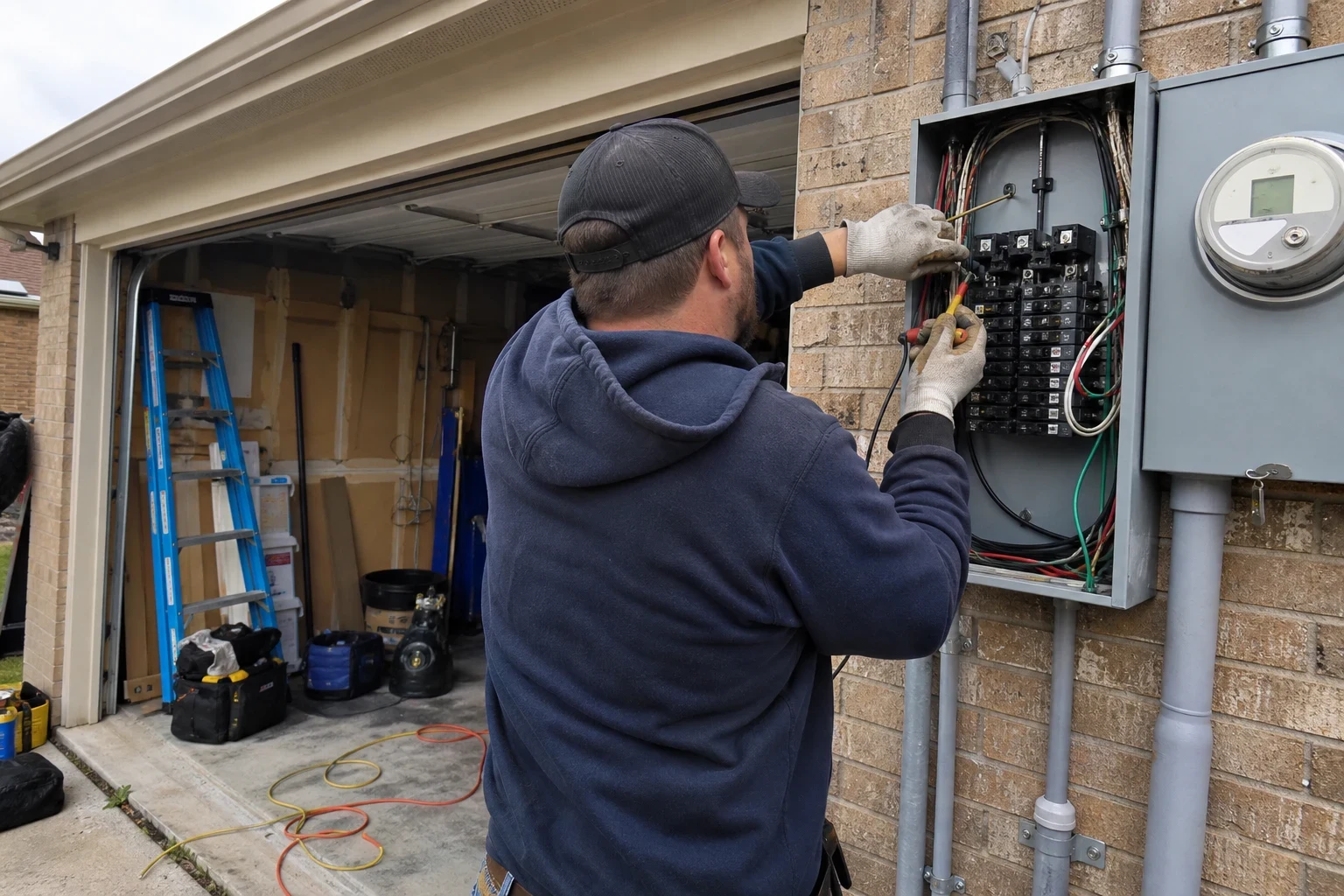
What Surge Protection Does for Your Home
A surge is a brief jump in voltage, far above the normal 120 or 240 volts. Some come in from outside, from lightning nearby or switching on the utility lines. Many start inside your home, every time a large motor like an air conditioner compressor or well pump cycles on and off. Each small hit wears on the circuit boards in your refrigerator, furnace, washer, TV and router.
A whole-home surge protective device mounts at your main panel and diverts that extra voltage to ground before it spreads through your wiring. Paired with good plug-in protectors at your most sensitive equipment, it gives your home two layers instead of none. The spring storm season around Cleburne makes that first layer worth having before the next round of thunderstorms rolls through.
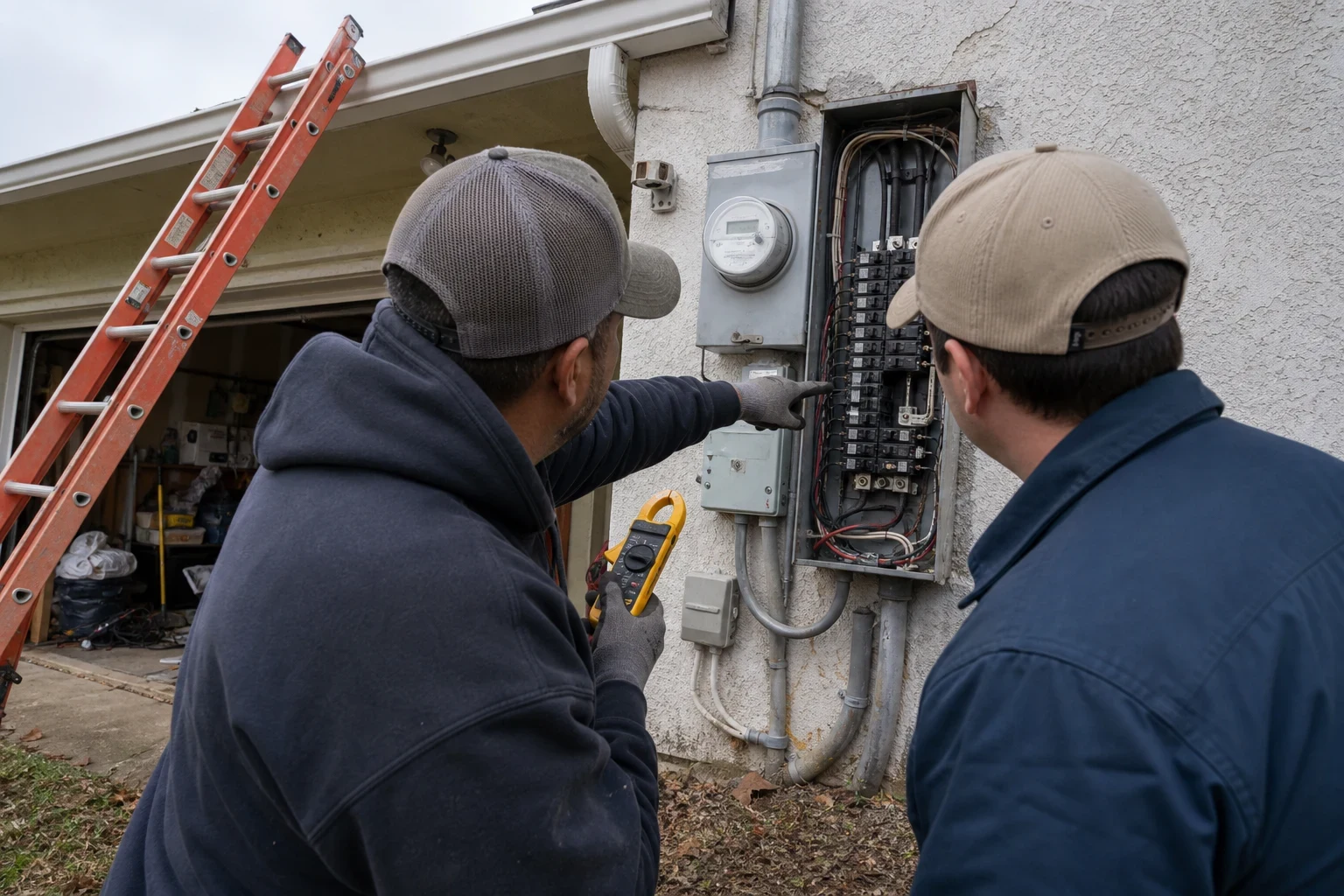
What the Installation Includes
- 01
Panel and service check
We look over your panel, main breaker and service entrance first. If something there needs attention before a surge device can do its job, you hear about it before any work starts.
- 02
Testing the ground path
The device can only send extra voltage somewhere safe if your grounding is sound. We trace it from the panel out to the rod in the yard, look at the clamp and wire along the way, and tighten or replace any connection that has worked loose or rusted.
- 03
Whole-home surge device
We install the device at or beside your main panel on its own breaker, keeping the leads short and direct. Short leads let it react faster, which matters with a spike that lasts only microseconds.
- 04
Plug-in protection advice
We point out where a quality point-of-use protector makes sense, such as your home office, entertainment center or the outlet feeding a smart appliance. You choose what to add.
- 05
Protecting your home while we work
We lay floor covering on the path to the panel and keep tools and packaging in one spot. When we leave, the area around your panel is swept and the cover is back on.
Questions about Surge Protection?
Call(682) 281-9399Signs Your Home Could Use Surge Protection
Electronics failing young
A TV, garage door opener or microwave quits well before it should. Repeated small surges are a common reason boards burn out early.
Trouble after storms
Clocks reset, devices reboot or something stops working after a thunderstorm. That is a surge you already felt, and the next one may be larger.
An HVAC board or appliance repair
A technician replaced a control board in your air conditioner, furnace or washer. Protecting the new part is cheaper than replacing it again.
New expensive equipment
You recently added an EV charger, a generator, a battery system or a lot of smart home gear. Each one carries electronics that a surge can damage.
Nothing at the panel today
If your panel has no surge device, your only protection is whatever power strips are plugged in, and many older strips are worn out without any warning.
How Your Visit Goes
- 1
A walkthrough with you
We start by asking what you want to protect and looking at the panel, the service entrance and the grounding outside. You get a clear explanation of what we recommend and why.
- 2
Your price before we begin
We go over the scope and cost with you before any tools come out. Nothing is installed until you agree.
- 3
A short power shutoff
We turn off the main breaker to install the device safely, so plan on your power being off for part of the visit. We tell you before it goes off and when it is coming back on.
- 4
Testing and cleanup
We restore power, confirm the device's status indicator shows it is working, and show you where to check it later. Then we pick up our coverings, sweep up and leave your home the way we found it.
What Moves the Price
Most surge protection jobs are straightforward, but a few things change the cost from one home to the next. We look at them during the visit and give you the price before starting. If permits or inspections are required by your local jurisdiction, we include that in what we tell you up front.
- Room in your panel
- If there is an open space for the device's breaker, installation is simple. A full panel may need breakers rearranged or tandem breakers added.
- State of the ground path
- If our test turns up a rusted clamp, a wire that has pulled loose or no rod we can find, that repair comes first. It adds parts and labor, and you see it as its own line.
- Device rating
- Devices differ in how much surge current they can handle and whether they mount inside or beside the panel. We match the device to your service and your equipment.
- Extra protection points
- Adding protection for a detached shop, a subpanel or specific equipment raises the cost, and we treat each one as a separate line you can accept or skip.
Surge Protection Questions
Will a whole-home surge protector stop a direct lightning strike?
No device can promise that. A direct strike carries more energy than any household protector is built for. What it does well is handle the far more common surges from nearby strikes, utility switching and motors cycling inside your home.
Do I still need power strips with surge protection?
For sensitive electronics, yes. The panel device takes the big hits, and a good plug-in protector catches what is left at the outlet. Older strips wear out over time, so it is worth replacing ones you have had for years.
How long will my power be off?
Only for the part of the visit when we are working inside the panel. Most of the visit, including the walkthrough and grounding check, happens with power on. We give you a heads-up before the shutoff so you can save work or pause anything running.
Who will be doing the work?
We hold a Master Electrical License, and Electrician Cleburne is a licensed electrical contractor, TECL 36609. The same standards apply whether we are installing surge protection or doing a panel upgrade.
Is the installation covered by a warranty?
Yes. Our work carries a 1-year workmanship warranty. Surge devices are also designed to wear down as they absorb hits, so we show you how to read the status light and tell when it is time for a replacement.
Give Your Appliances a Layer of Defense
We serve Cleburne along with Joshua, Burleson, Keene and nearby towns. Book a service visit and we will check your panel and grounding, install the device and leave the area around it clean.